
A dental implant is the foundation placed in the jawbone. An implant restoration is the replacement tooth or teeth supported by that foundation. For a single missing tooth, the restoration is usually a crown, with a connector called an abutment joining it to the implant.
These are parts of one treatment, rather than competing tooth replacement choices. Understanding the difference can help you follow your dentist’s recommendations and know what is included in your treatment plan.
At Brentwood Family Dentistry in Brentwood, MO, we believe you should understand your options before making decisions about your smile. Here is a straightforward guide to the terms you may hear during an implant consultation.
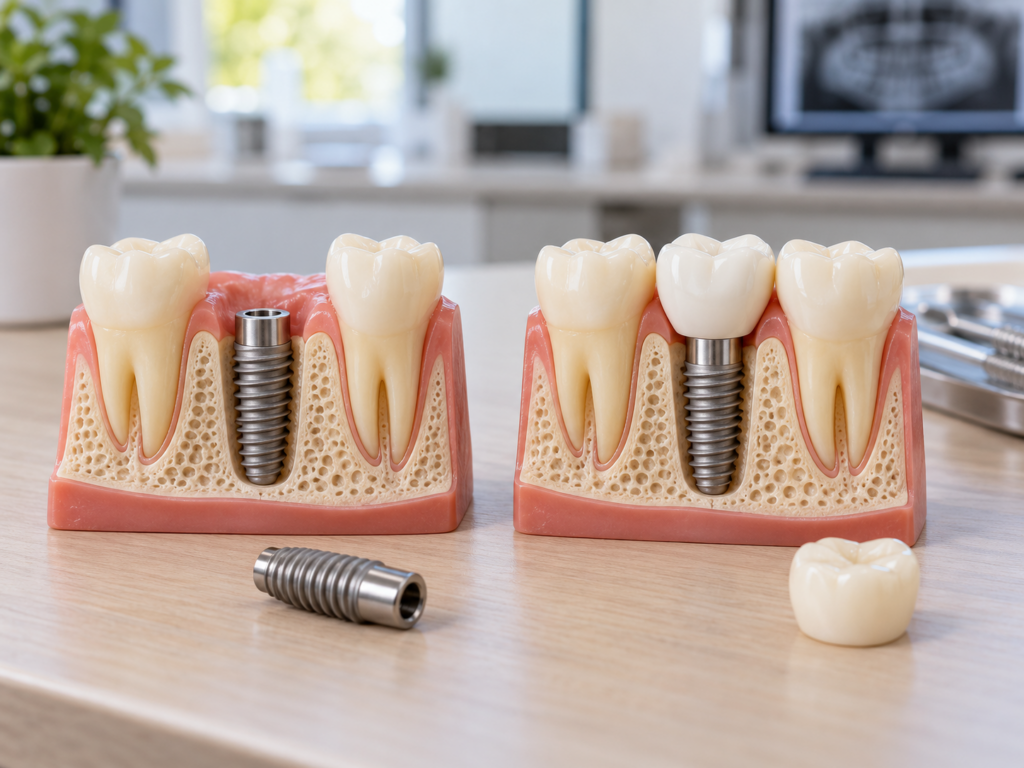
Understanding the Parts of an Implant Tooth
In everyday conversation, “dental implant” sometimes means the entire replacement tooth. In a treatment plan, however, it may refer specifically to the implant body placed in the bone.
A typical single-tooth replacement has three main parts:
| Component | What it is | What it does |
| Dental implant body | A small post surgically placed in the jawbone | Acts as an anchor in place of the missing tooth’s root |
| Abutment | A connector between the implant and restoration | Provides the connection that supports the replacement tooth |
| Implant restoration | The artificial tooth or teeth attached to the implant system | Replaces the visible portion used for smiling and chewing |
The exact components and connections depend on the implant system and treatment design. This table describes a common arrangement, rather than every possible configuration.
When you read about dental implants, remember that the implant body and the finished tooth serve different purposes. One provides support within the jaw; the other completes the visible tooth replacement.
What Counts as an Implant Restoration?
“Implant restoration” describes the replacement tooth or teeth supported by implants. It does not always mean one crown.
Depending on the number of missing teeth and the treatment plan, a restoration may be:
- An implant crown: A single replacement tooth supported by an implant.
- An implant-supported bridge: Several connected replacement teeth supported by implants.
- An implant-supported denture: A replacement for multiple or all teeth in an arch, with implants providing support or retention.
Some restorations are fixed in place, while others are designed to be removed by the patient. The attachment method and cleaning instructions depend on the design. Your dentist can explain which options are appropriate for your situation.
The useful distinction is between the foundation and what it supports. A crown, bridge, or denture describes the replacement teeth. The implant describes the anchor beneath them.
How the Parts Come Together: A Single-Tooth Example
Imagine you are missing one tooth and your dentist recommends replacing it with an implant and crown. Your treatment involves both placing the foundation and creating the restoration.
1. Evaluate and Plan
Your dentist examines the area and reviews your oral health, medical history, and goals. Bone support, gum health, and the position of surrounding teeth help guide the recommendation.
This is also the time to discuss alternatives, possible preparatory treatment, and what each stage involves. Implant treatment is individualized; having a missing tooth does not automatically make it the right choice for you.
2. Place the Implant and Monitor Healing
The implant body is surgically placed in the jawbone. During healing, the surrounding bone develops a connection with the implant. This process is called osseointegration.
That biological process takes time. Your dentist monitors healing and determines when the implant is ready for the next stage. Some patients may receive a temporary replacement tooth during treatment, depending on their circumstances.
3. Design the Replacement Tooth
Once the site is ready for restoration, impressions or digital scans help capture the information needed to create the crown. Planning considers its size, shape, shade, and relationship to nearby teeth.
The connector and crown must also work with the implant system already in place. This is why accurate treatment records matter, especially if different offices have been involved in your care.
4. Attach and Check the Restoration
The final crown is connected to the implant system. Your dentist checks how it fits and how your upper and lower teeth meet when you bite.
You will also receive instructions for cleaning and follow-up. Placement of the final crown completes an important treatment stage, but ongoing care remains part of maintaining the implant and restoration.
Why Treatment Plans May List Separate Components
Seeing “implant,” “abutment,” and “crown” listed separately can be confusing if you expected one item labeled “replacement tooth.” Separating the terms makes it easier to explain what will happen and what the proposed treatment includes.
For example, a discussion about implant placement concerns the foundation in the jaw. A discussion about the implant crown concerns the replacement tooth that will attach to it. Both contribute to the finished result.
Ask your dental team to walk through the written plan with you:
- Does the plan include implant placement, the connector, and the final restoration?
- Is a temporary tooth replacement included or recommended?
- Are any steps needed before implant placement?
- Which appointments involve surgery, healing checks, or restoration?
- Who should I contact with questions at each stage?
If you are reviewing an estimate, ask whether it covers the complete recommended treatment or a particular phase. Do not assume that a quoted implant fee automatically includes every component.
You do not need to memorize technical terms. You should leave the conversation knowing what is being recommended, why it is recommended, and what comes next.
Where CEREC Primescan Fits
Brentwood Family Dentistry uses CEREC Primescan technology, which supports digital impressions and implant restoration workflows. Digital scanning provides information that can help with planning the replacement tooth.
It helps to separate three different activities:
- Implant placement puts the supporting post into the jawbone.
- Healing allows the surrounding tissues and bone to respond after placement.
- Restoration design helps create the tooth or teeth supported by the implant.
A scan contributes to the restorative workflow. It does not replace implant surgery or remove the need to evaluate healing.
Similarly, the practice’s same-day CEREC crown services should not be taken to mean that every implant and final crown can be completed in one appointment. The appropriate method and timing depend on your treatment plan.
Preparing for Your Implant Consultation
Bring a list of medications, relevant medical conditions, and questions. If an implant has already been placed elsewhere, bring available treatment records or ask how those records can be shared.
Be clear about your priorities. Perhaps you want to understand your chewing options, feel more comfortable smiling, or learn what treatment would involve before making a decision.
Useful questions include:
- Which restoration are you recommending, and why?
- What might affect my healing or treatment sequence?
- How will the replacement tooth be planned?
- What will I need to do at home?
- When will you reassess whether I am ready for the final restoration?
Your overall health and habits can affect implant healing. Share that information openly so your dentist can account for it when planning care.
Caring for the Implant and Its Restoration
A replacement tooth still needs regular attention. Follow your dentist’s instructions for cleaning around the restoration and along the gumline, including any recommended tools for your particular design.
Keep recommended follow-up visits and dental exams and cleanings. These appointments give your dental team an opportunity to assess your oral health and review home care.
Contact the office if the restoration feels loose, your bite changes, or you develop persistent discomfort. An examination can help identify which part needs attention. Avoid trying to adjust or tighten an implant component yourself.
Frequently Asked Questions
Is an implant crown the same as a dental implant?
An implant crown is the replacement tooth attached to the implant system. The implant body is the supporting post in the jawbone. People sometimes use “implant” to describe the whole replacement, which is why clarifying the term can help.
What is an implant abutment?
An abutment is a connector between the implant body and restoration. Its design depends on the implant system and the replacement tooth being planned.
How long after implant placement will I receive the final restoration?
Timing depends on healing, the condition of the treatment site, and any additional procedures. Your dentist will explain the expected sequence and reassess your progress before moving forward.
Does every implant restoration use a crown?
No. A crown commonly replaces one tooth. Implant-supported bridges or dentures may replace multiple teeth, depending on the recommended treatment.
Does digital scanning mean the entire treatment is finished in one visit?
No. Scanning helps capture information for restoration planning. Implant placement, healing assessments, and attachment of the final replacement tooth are separate parts of care.
Understand Your Treatment Before You Begin
Knowing the roles of the implant, abutment, and restoration can make your next dental conversation easier to follow. You can ask about the foundation, the replacement tooth, and how the proposed steps fit together.
At Brentwood Family Dentistry, we welcome questions and explain recommendations in language you can understand. If you are considering tooth replacement, contact Brentwood Family Dentistry to schedule a consultation and discuss your individual options.